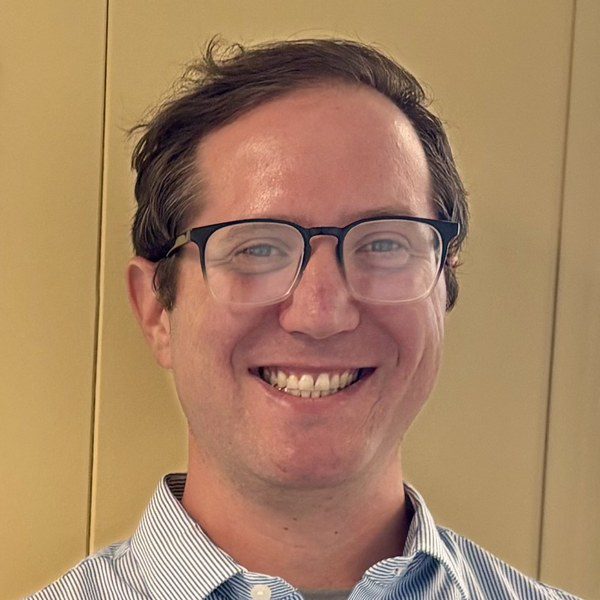
I’m Irving Steel, a second-year law student at Roger Williams University School of Law. Before law school I worked inside the kinds of organizations lawyers advise. As manager of WCFO International’s first North American office, for a $100 million Hong Kong conglomerate, I handled the company formation, the hiring and the executive immigration, and made extended working visits to three of the group’s factories in China. In Shanghai I founded Green Initiatives, an environmental nonprofit, and grew one chapter into a nine-city network with 26 partners. As CEO of an agriculture technology startup with no legal staff, I was personally responsible for the company’s registration in China.
This past summer I saw the other end. In the Non-Profit Organizations / Public Charities Division of the Massachusetts Attorney General’s Office, I worked on what happens when institutions run out of money: nonprofit dissolution petitions and a survey of college closures. In March I worked with the Sugar Law Center in Detroit through my school’s pro bono program.
I’ve been the client. Now I’m becoming the lawyer. I don’t need to learn what a client’s problem looks like from the inside. I need to learn the law that fixes it. I’m looking for a summer 2027 position in New England public-interest, energy and environmental, health, or charities law.
Back home in Connecticut, I co-founded 668 KTV, a community media company whose YouTube channel has more than 150,000 subscribers. More than 200 long-form interviews with local organizations, veterans, and people doing quiet work taught me one thing: the people who most need information get the least of it.
Most people encounter the law at its worst moments: a lease dispute, a denied benefits claim, a government form designed to confuse. The gap between what the law says and what people think it says is too wide, and that gap tends to hurt the people who can least afford it.
The thread through all of it is the same: take a complicated system and make it legible to the people it affects. That is what I write about here. Notes on law school itself, from class to pro bono work, live under Law School Notes.
Nothing here is legal advice. If something I’ve written is unclear, incomplete, or wrong, tell me: irvingsteelre@gmail.com.
At a glance
- Law school
- J.D. candidate, Roger Williams University School of Law, May 2028. Dean’s List. LEAD Fellow. Lexis Ambassador. Selected for the Judicial Clinical Externship Program, spring 2027.
- Legal experience
- Legal Intern, Massachusetts Attorney General’s Office, Non-Profit Organizations / Public Charities Division, summer 2026.
- Pro bono
- Sugar Law Center for Economic and Social Justice, Detroit, through Alternative Spring Break, March 2026.
- Service
- VITA free tax preparation (IRS certified).
- Education
- M.P.H., Public Health Leadership, The Chicago School of Professional Psychology. B.A., International Relations, University of Georgia, with a year at Université Jean Moulin Lyon 3.
- Before law
- Founder and director of Green Initiatives, an environmental nonprofit in Shanghai. Co-founder and director of 668 KTV. Business roles across the U.S. and China. Adjunct faculty, Mitchell College.
- Green building
- LEED AP (U.S. Green Building Council). LEED AP project manager at Arc8X Design for DNA Shanghai Centre, certified LEED for Commercial Interiors Platinum in 2010.
- Languages
- Conversational Mandarin and French. About six years in China; roughly 50 countries.
If you are hiring
I am looking for summer 2027 legal positions, including summer associate roles, with law firms, government offices, and public-interest organizations, especially in Rhode Island, Massachusetts, and Connecticut. I write to make the law legible, which is the same skill a junior lawyer owes a client, a partner, or a judge. Start with my selected writing or my experience, then reach me through the contact page, at irvingsteelre@gmail.com, or on LinkedIn.